
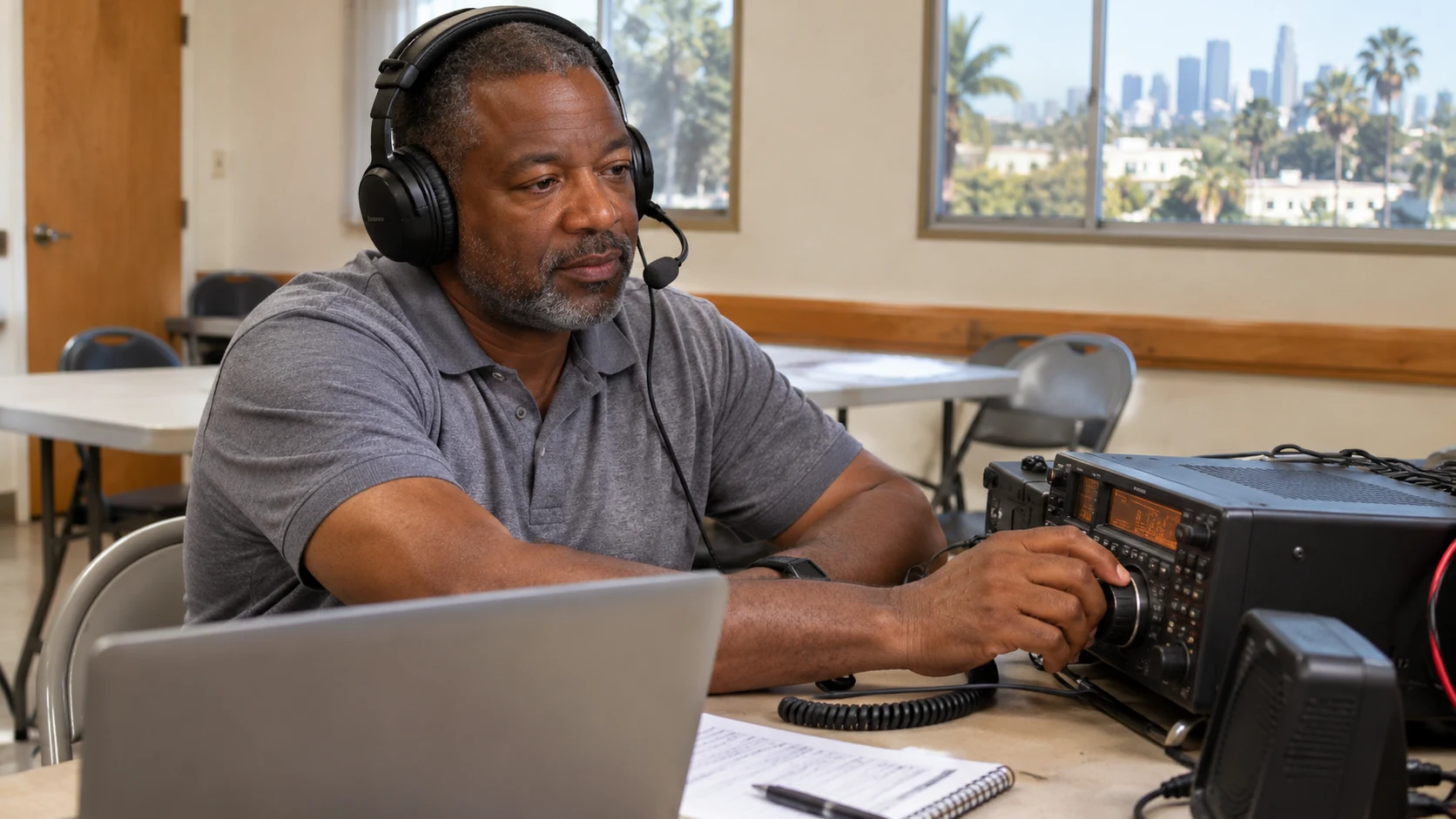
A useful emergency message must reach the right person, remain understandable, and arrive with enough context for someone to act. Radios are one part of that process. Trained people, agreed procedures, and coordination matter just as much. The LAFD Auxiliary Communications Service offers a local example of how an organized volunteer program supports that broader communication task.
This overview explains the program’s publicly described purpose and questions worth asking before exploring participation. Enrollment procedures, assignments, and training arrangements should always be confirmed with the program itself. A general interest in radios is a starting point for learning, while operational involvement requires the organization’s own guidance.
What LAFD says about the program
The Los Angeles Fire Department’s ACS page describes an amateur radio program managed by LAFD under an Auxiliary Communications Service agreement with the state emergency services office. It identifies licensed amateur radio operators as a source of backup communications and says members assist with auxiliary communications during brush fires and other disasters.
That description establishes the program’s supporting purpose. It does not mean that any person holding a radio can join an incident response or choose an assignment. People interested in volunteering should follow the official program link on LAFD’s page and ask about current opportunities, prerequisites, and expectations.
Why auxiliary communications matter
Planning communication around a single device leaves unanswered questions. What happens if that device is unavailable? Who receives a message when the usual contact is occupied? How does a replacement operator understand what has already happened? Auxiliary planning addresses continuity as well as equipment.
For example, a practice exercise might ask one group to pass a location and resource request to another. The exercise can reveal unclear place names, incomplete messages, or uncertainty about who should acknowledge receipt. Those problems are useful to discover during training, when participants can stop, ask questions, and revise the process.
A household can apply the same planning mindset on a smaller scale. Our guide to emergency radios for Los Angeles households explains the questions to consider when choosing equipment for a specific communication need.
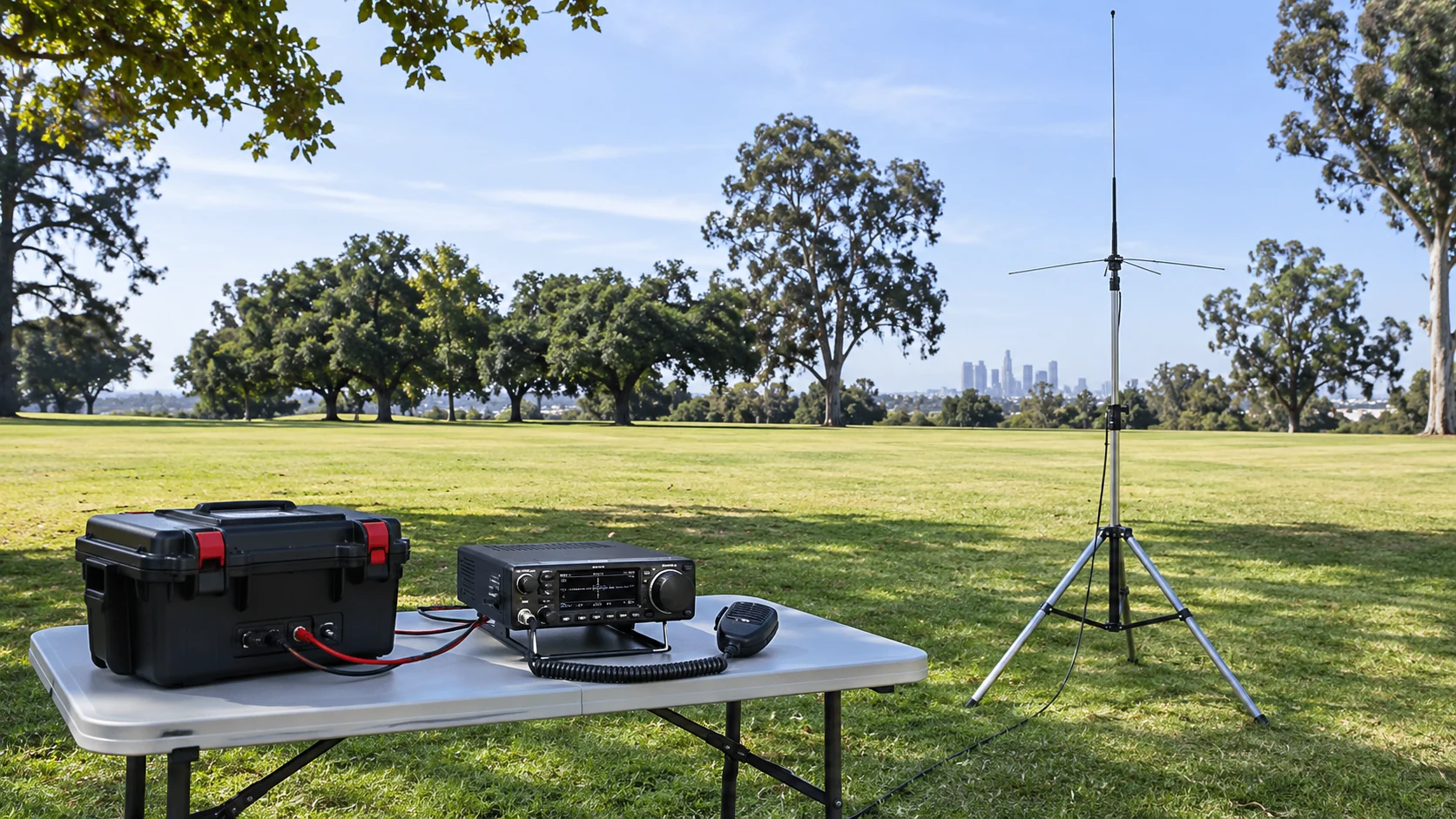
The work involves people and procedures
Listening, recording, and confirming
Good volunteer preparation includes practicing how to listen without interrupting, record essential details, and recognize when a message needs clarification. Technical confidence is helpful, but it should support a clear and orderly exchange. Knowing when to ask a supervisor is another useful skill.
Questions to ask during an orientation
- Who assigns work, and how are volunteers notified about an approved activity?
- What training or demonstrations of competence are expected?
- How are messages logged, corrected, and handed over to another operator?
- What personal equipment, if any, should participants obtain?
- What limits apply to a volunteer’s responsibilities?
These questions avoid assumptions about a role that may look simple from outside. A volunteer might enjoy radio equipment yet prefer a schedule or working environment different from what a particular program requires. Learning the details first allows both the applicant and the organization to judge the fit.
How ACS relates to community preparedness
Los Angeles has several preparedness programs with different purposes. The LAFD Community Emergency Response Team program describes training in disaster preparedness and response skills, including communications and radio use. ACS focuses on auxiliary communications. Reading each program’s description helps prospective volunteers avoid treating separate opportunities as interchangeable.
Someone who wants to help neighbors organize household plans may begin with community preparedness education. Someone interested in a structured radio role can investigate ACS. There may be useful overlap in what a person learns, but one class or membership should not be assumed to confer another organization’s qualifications or deployment authority.
Our article on finding emergency preparedness training in Los Angeles offers a way to compare programs by audience, learning objectives, accessibility, and the amount of time you can realistically commit.
Prepare your household before committing time
Volunteering is easier to plan when household responsibilities have been discussed. Consider who depends on you, how family members will communicate, and what would cause you to decline an assignment. Having an honest conversation before an emergency prevents a volunteer commitment from becoming an unexpected household problem.
The city’s Ready Your LA Neighborhood household resources address emergency kits, communication planning, and official alerts. Use them to review your own arrangements before deciding how much time or equipment you can offer elsewhere.
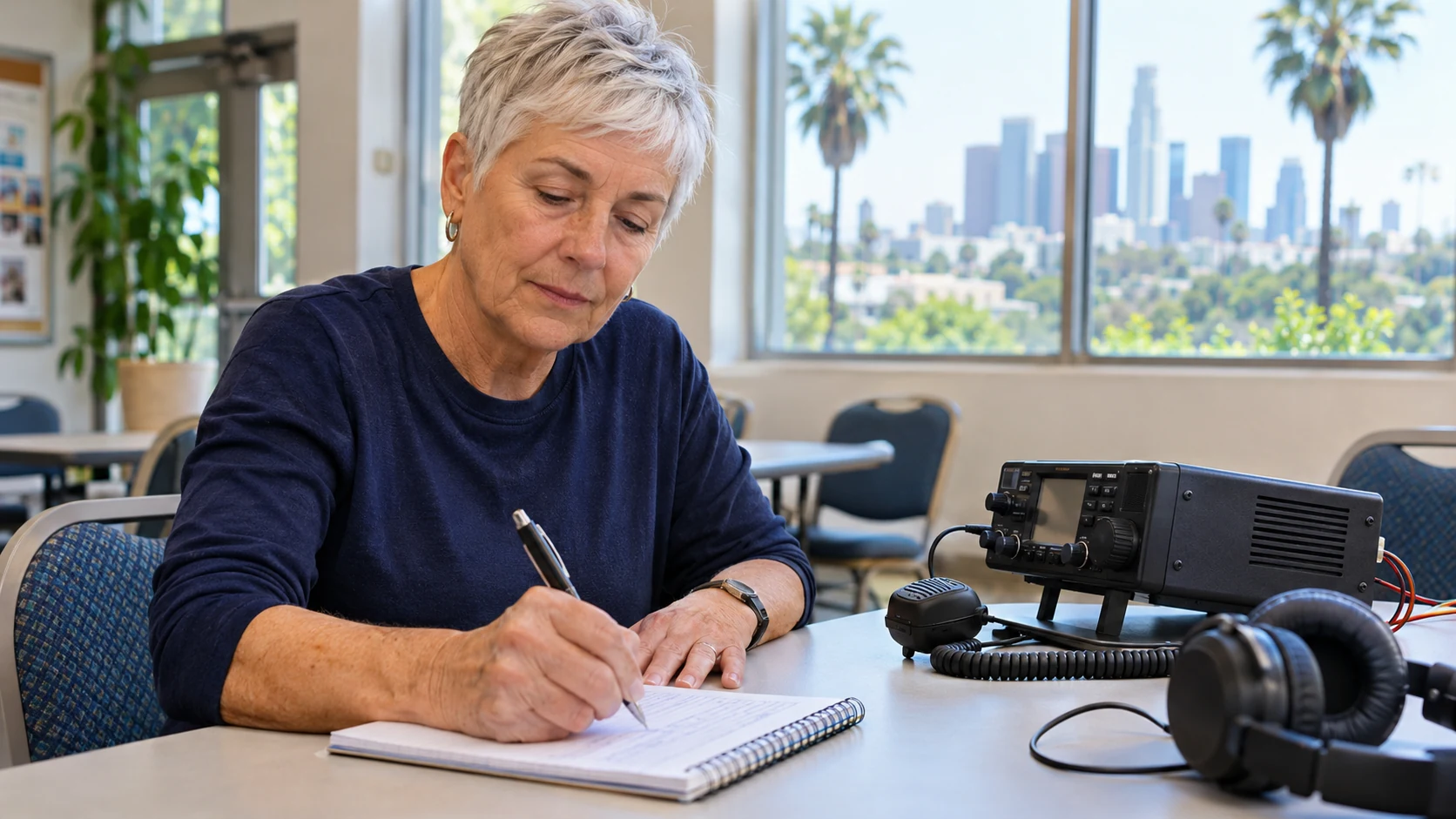
Think through routine practicalities too: transportation, meals, medications, charging arrangements, and a way to notify your household if a planned activity takes longer than expected. You can record personal limitations privately and discuss relevant needs with the program coordinator. Reliability includes communicating when you are unavailable.
Choose equipment after understanding the role
Buying an expensive radio before speaking with an organization may create unnecessary costs. Equipment suitability depends on the intended use, permitted operation, compatibility, and the program’s requirements. Ask which purchases are necessary, which are optional, and whether training equipment is available before deciding what to buy.
Budget for the ordinary supporting items that an approved role may require, such as compatible charging equipment or a suitable carrying arrangement. Confirm the details with the coordinator rather than copying another volunteer’s setup. Our backup power planning guide provides a household planning framework for thinking about charging needs and available power.
Set a learning objective for each practice session. You might concentrate on accurately recording a location, confirming a message, or understanding the handover process used in that exercise. Afterward, ask the instructor which details were clear and which need work. Keep a brief personal learning log, without copying sensitive operational information. Reviewing that log before the next session makes progress easier to recognize and helps you bring specific questions rather than a general sense that something was confusing.
Keep learning tied to an organized purpose
A useful first step is to read the official ACS information, write down your questions, and follow its current contact instructions. Describe your experience accurately, including whether you are new to amateur radio or have previous volunteer experience. Ask what an appropriate next step would be for someone at your level.
After any orientation or practice activity, note what you understood, what needs repetition, and what equipment questions remain. Small improvements in listening, message clarity, and preparation can be more useful than accumulating devices. The goal is dependable participation within a coordinated program, supported by a household plan that also works for you.