
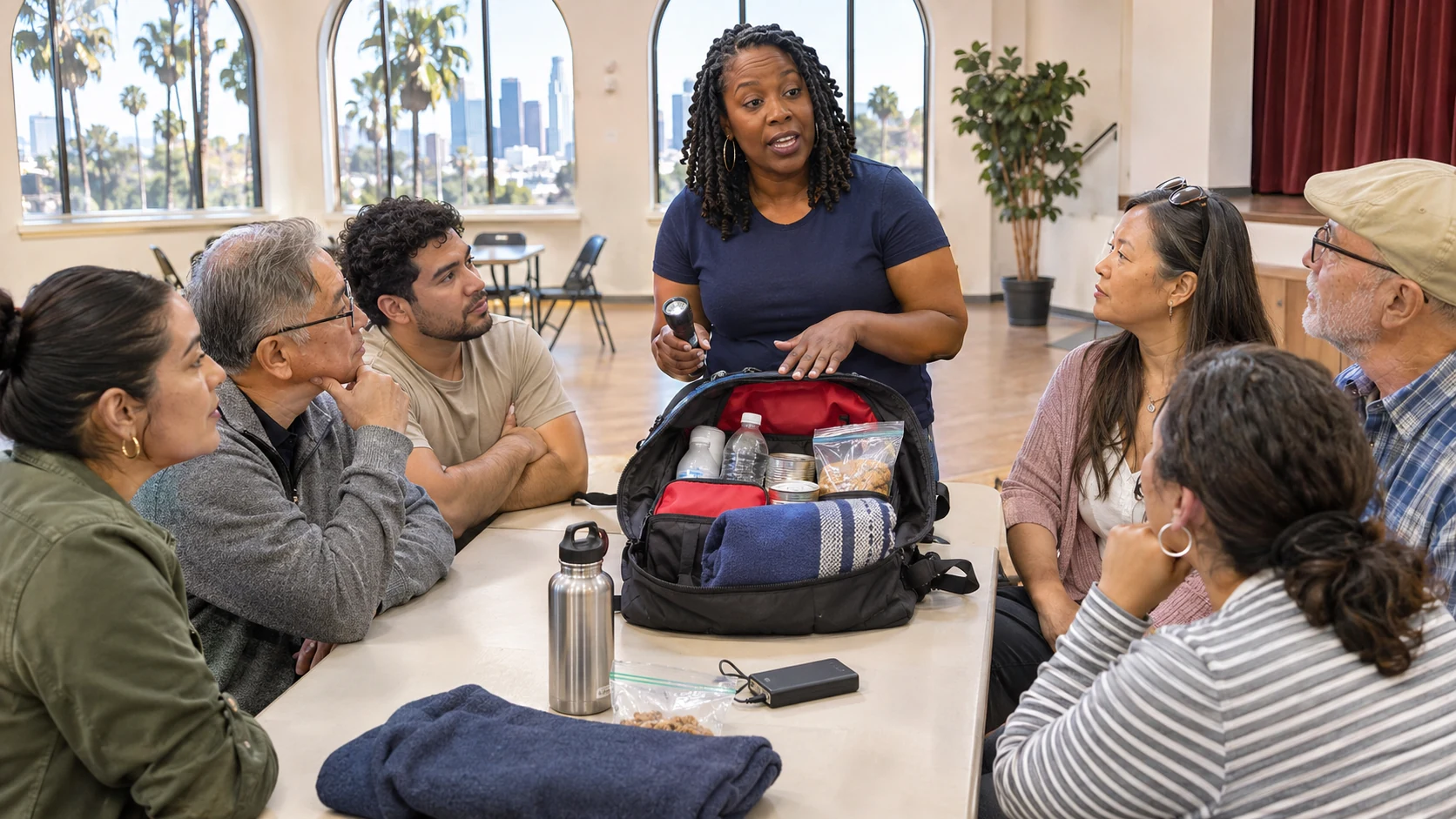
Finding emergency preparedness training in Los Angeles is easier when you start with a specific learning goal. You might want to organize your household, understand neighborhood planning, learn about volunteer communications, or explore a structured community program. Each goal points toward a different kind of class, and a familiar program name does not tell you everything about its current format.
For Los Angeles residents, the most useful search begins with official local program pages. They provide a route to current registration information and help you identify who is offering a course. This guide explains how to compare those opportunities and prepare to participate without assuming that every class leads to a volunteer assignment.
Choose one learning goal first
Write a sentence describing what you want to be able to do after the training. Examples include creating a household plan, understanding a neighborhood workshop, or learning how an organized volunteer communications program operates. A clear goal makes it easier to ask whether a course is suitable for beginners and whether it includes practical exercises.
Consider what you already know. Someone who has assembled supplies but never discussed family communication may benefit from a planning workshop. A person interested in radio volunteering may need an introduction to the relevant program before purchasing equipment. The Los Angeles emergency preparedness guide can help identify gaps you want a class to address.
Start with the correct local program
City of Los Angeles opportunities
The Los Angeles Fire Department’s CERT page describes its Community Emergency Response Team training and links to class information. Review the official listing before relying on a forwarded flyer. Confirm the audience, schedule, location, and registration process for the particular course you are considering.
Los Angeles County opportunities
The Los Angeles County Fire Department’s CERT program is a separate source of training information. Its page explains that volunteers are connected with their respective local jurisdictions rather than employed by the department. Ask which program serves your community and how any later volunteer participation is arranged.
What to verify before registering
- The organization conducting the class and its official registration link.
- The intended audience and any prerequisites or participation requirements.
- Whether the course involves several sessions that must all be attended.
- The venue, transportation options, and accessibility arrangements.
- Whether completion provides education, a certificate, or eligibility for a separate application.
A course may be useful even if it does not lead to a formal role. The important point is understanding the outcome before committing time. Save the registration confirmation and the organizer’s contact information so that you can check for changes through the same source.
Consider household and neighborhood workshops
The city’s Ready Your LA Neighborhood program offers resources for households, neighborhoods, and businesses. Its planning approach is particularly relevant if your goal is to help people discuss preparedness together. Start with the section that matches your setting and ask about current workshops or supported activities.
A household workshop and a neighborhood session can complement each other. The first helps you identify your own contacts and needs. The second helps participants discuss how they might communicate and organize agreed tasks. Neither requires your group to share every detail of each household’s circumstances.
Before inviting neighbors to a session, ask what they would find useful. Translation, an accessible venue, a shorter introductory meeting, or a different time may make participation more practical. Our guide to creating a neighborhood emergency contact plan suggests a manageable starting project for a group.
Match the course format to your needs
Compare the learning method as carefully as the title. A presentation can introduce concepts, while a guided exercise lets you practice them and ask questions. Some programs combine online material with scheduled activities. Confirm how much independent preparation is expected and whether equipment or clothing requirements apply.
Ask the organizer about accommodations before the class when possible. Explain the communication format or physical access you need rather than assuming a standard arrangement will work. You can also ask about language availability, rest breaks, seating, and whether another person may accompany you.
If a course includes medical or other practical skills, use the instructor’s demonstrations and current training materials. Written summaries can help you remember what to ask, but they are not a substitute for the supervised instruction the course requires. Discuss any uncertainty with the instructor during the session.
Explore communications volunteering deliberately
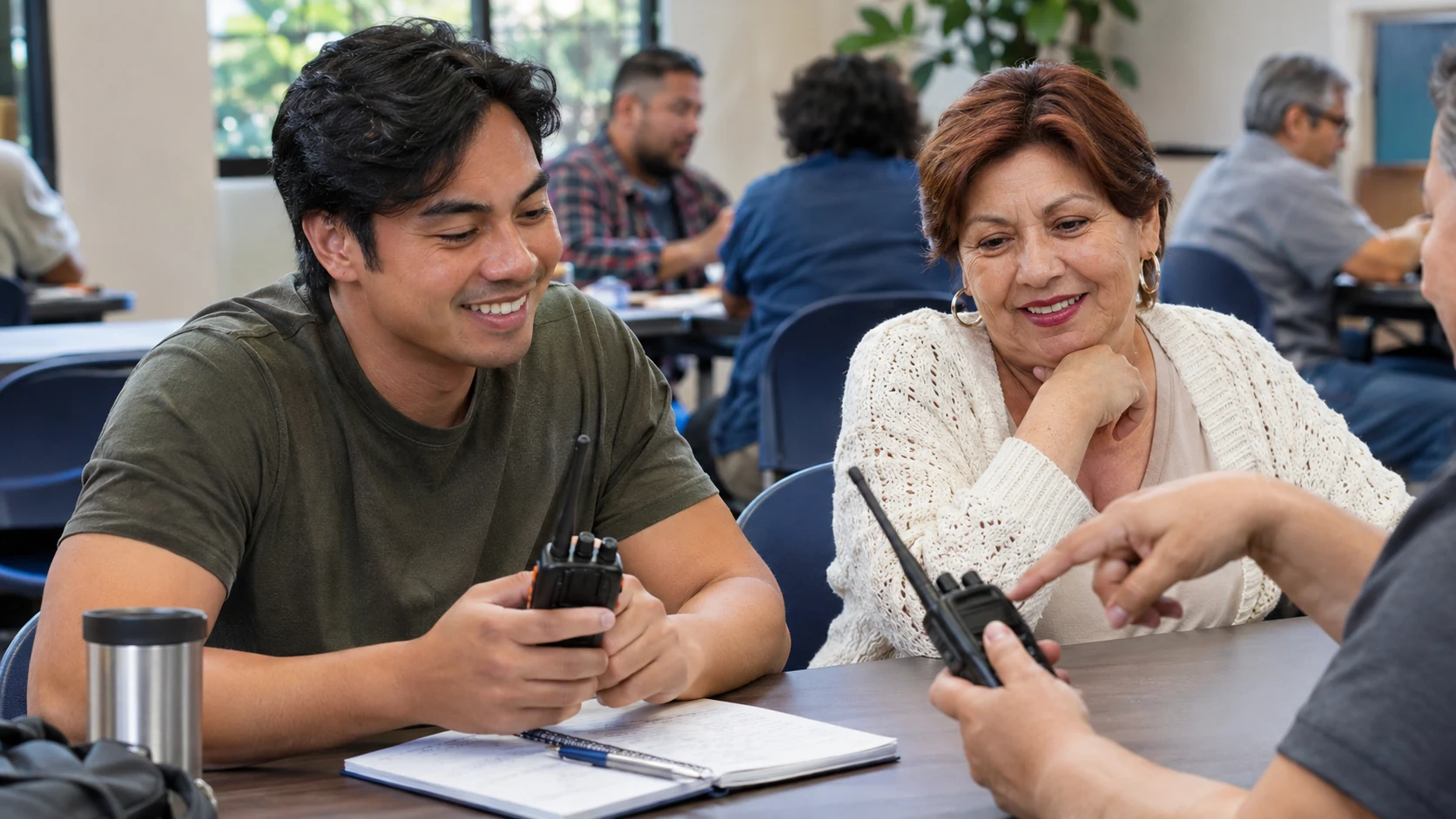
People drawn to radio communications should investigate the organization that manages the role. The LAFD Auxiliary Communications Service page describes a program involving licensed amateur radio operators and backup communications. Its official program link is a starting point for questions about current participation.
Ask about the expected progression from interest to orientation, practice, and any approved assignments. Also ask which equipment decisions should wait until after an introductory conversation. Our explanation of LAFD’s Auxiliary Communications Service outlines questions that can help you assess the fit.
When comparing two courses, look beyond which one is offered first. A nearby introductory session may suit your present goal better than a longer program you cannot attend consistently. Ask whether missed sessions can be made up and whether the organizer recommends a particular sequence. If you are considering a class for an entire household, check whether every participant meets its requirements and whether the material suits the ages involved.
Prepare to take part
Before attending, read the instructions and make a short list of questions tied to your learning goal. Bring whatever the organizer requests and allow enough time to locate the room. If something prevents you from attending, notify the organizer so that another person may be able to use the place.
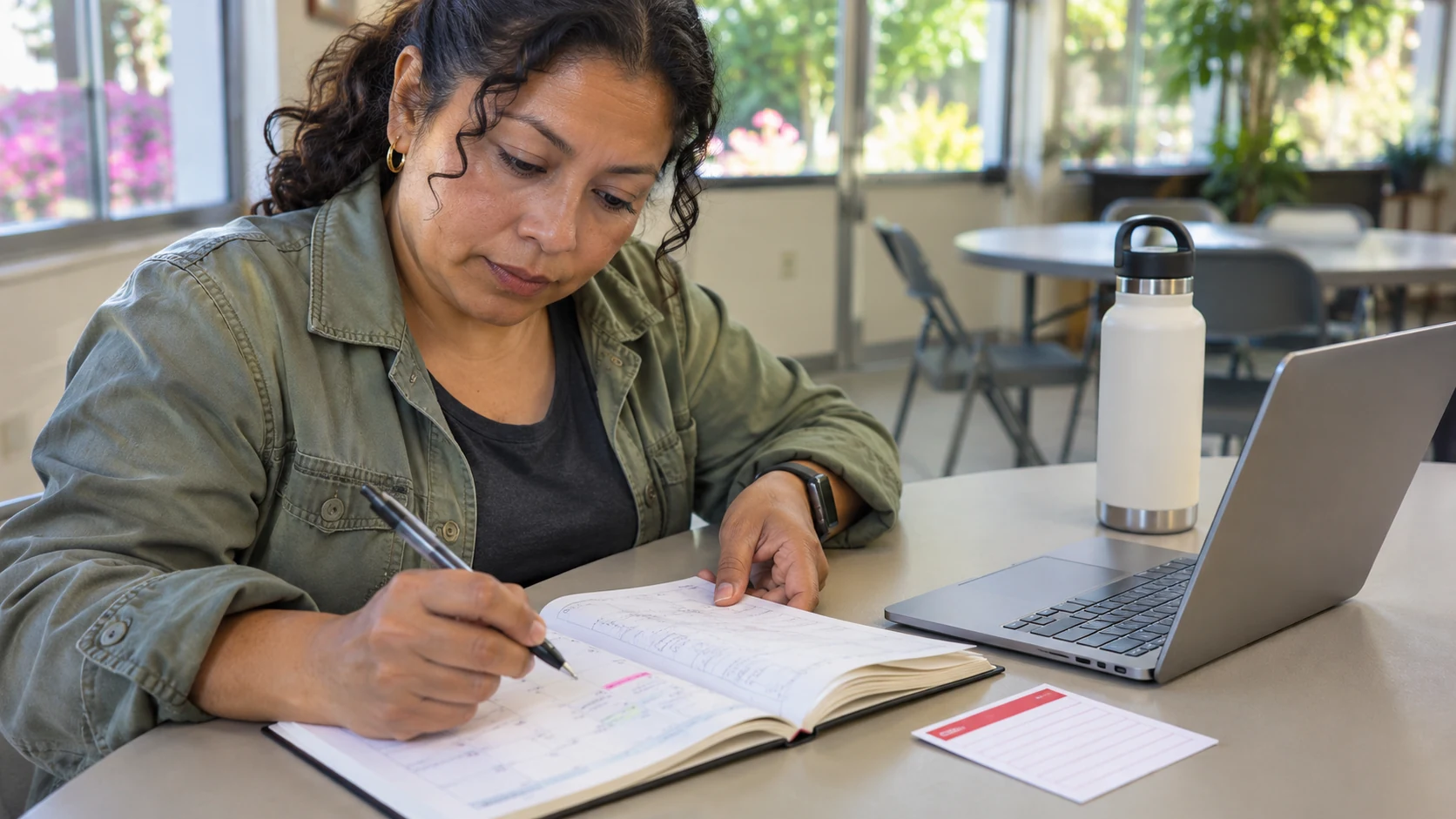
During training, record practical follow-up tasks in your own words. A note such as “confirm our family meeting location” is easier to act on later than a page of disconnected terminology. Ask for the source of any handouts so that you can find updated versions when needed.
Turn learning into a repeatable habit
Choose one manageable action after the course. Update a household contact card, test your agreed communication method during an ordinary check-in, or arrange a brief discussion with neighbors. Tell participants what the exercise covers and make clear that it is practice. Note any difficulties and adjust the plan together.
Keep completion records where you can find them, along with any information about refresher opportunities. Training can help you recognize both what you can contribute and what remains outside your preparation. Continued participation works best when it is realistic, organized, and connected to the needs of your household and community.