
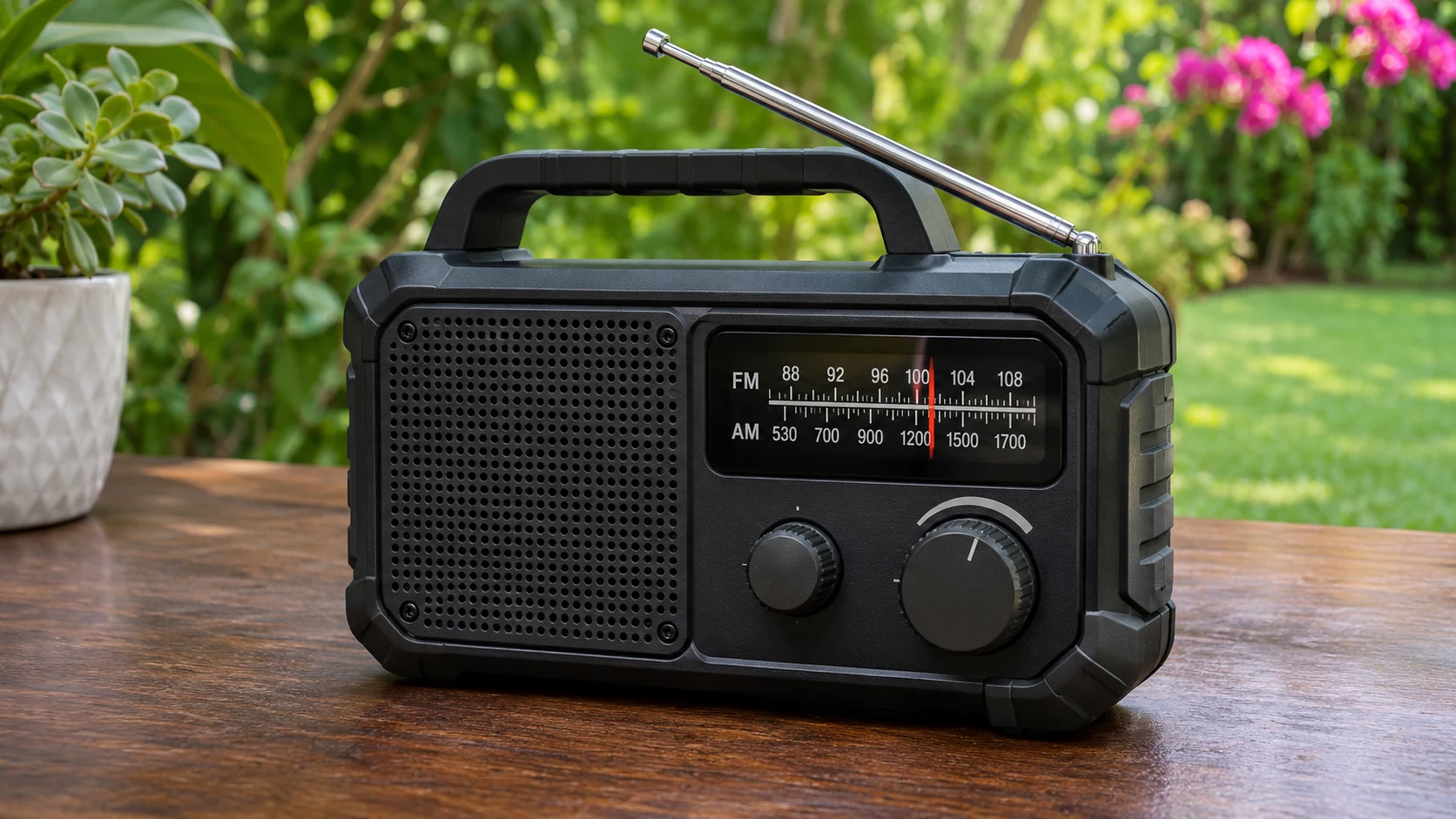
Emergency radios for Los Angeles households can provide another way to receive information when a phone is unavailable. The most useful choice depends on the job you want the radio to perform: listen to local broadcasts, receive weather information, or communicate with someone using compatible two-way equipment.
Start with that job before comparing products. A radio with many advertised features is not automatically easier to use, and receiving a signal is different from being able to call for assistance. Match the device to a realistic household plan.
What Emergency Radios for Los Angeles Households Can Do
A receive-only radio lets you listen. A two-way radio also allows communication with other appropriately equipped users under the rules for its service. Some products combine functions, but you need to check the specifications rather than assume that every emergency radio does everything.
Ask three questions before buying: What information do we want? Who will use the device? Where will it be kept? Those answers will help you decide whether portability, accessible controls, alert features, or a particular power supply matters most.
AM/FM Broadcast Receivers
A portable AM/FM radio receives participating broadcast stations without needing your household internet connection. It can be a practical way to follow local reporting and emergency information when stations carry it. The county includes portable radios and spare batteries in its disaster supply guidance.
Test the stations you expect to use from the place where the radio will be stored. Write down useful station names and frequencies on a small card. A preset button is convenient, but the written record helps if settings are lost or another person uses the device.
NOAA Weather Radio Receivers
NOAA Weather Radio All Hazards broadcasts information from the National Weather Service. It carries weather information and can also carry certain other hazard messages. It provides a different information channel from an ordinary AM/FM broadcast station.
The National Weather Service explains that NOAA broadcasts use a separate radio band. A basic AM/FM receiver cannot receive them unless it also includes weather-band capability. Some weather radios have alert functions, while others simply let you listen. Read the product description carefully.
Two-Way Radios
Handheld two-way radios serve a different purpose. The current Family Radio Service rules describe FRS as a short-distance communication service. Such radios may help nearby users coordinate, but a household should test its intended arrangement before relying on it.
Different radio services have different operating requirements. For example, the General Mobile Radio Service rules require a valid license for GMRS operation and allow a licensee to authorize immediate family members to use the licensee’s stations. Read the eligibility and operating provisions before transmitting; a product’s appearance does not tell you which rules apply.
Before Adding Two-Way Radios to the Plan
- Identify the radio service and confirm the requirements for lawful use.
- Agree on who will carry each device and when to check in.
- Practice with compatible equipment in the places you expect to use it.
- Decide what to do if the other person cannot be reached.
Do not treat a handheld radio as a guaranteed connection to emergency responders. More specialized volunteer communications work involves training and organized procedures. Our introduction to the LAFD Auxiliary Communications Service explains that community-service context.
Check Reception Where You Live
The National Weather Service’s reception guidance notes that terrain, buildings, and the position of a receiver can affect NOAA Weather Radio reception. A signal can differ between rooms. Listening successfully at a store or a friend’s home does not establish how the radio will work at your address.
Follow the manufacturer’s setup instructions and try practical locations in your home. Consider where the radio can remain accessible and where an alert can be noticed. Do not create a fall hazard or block an exit while searching for a better position.
If reception is unreliable, review the official coverage and outage information and seek appropriate equipment advice. Keep another information source in the household plan. Buying a second device without understanding the reception problem may not resolve it.
Choose Features People Can Use
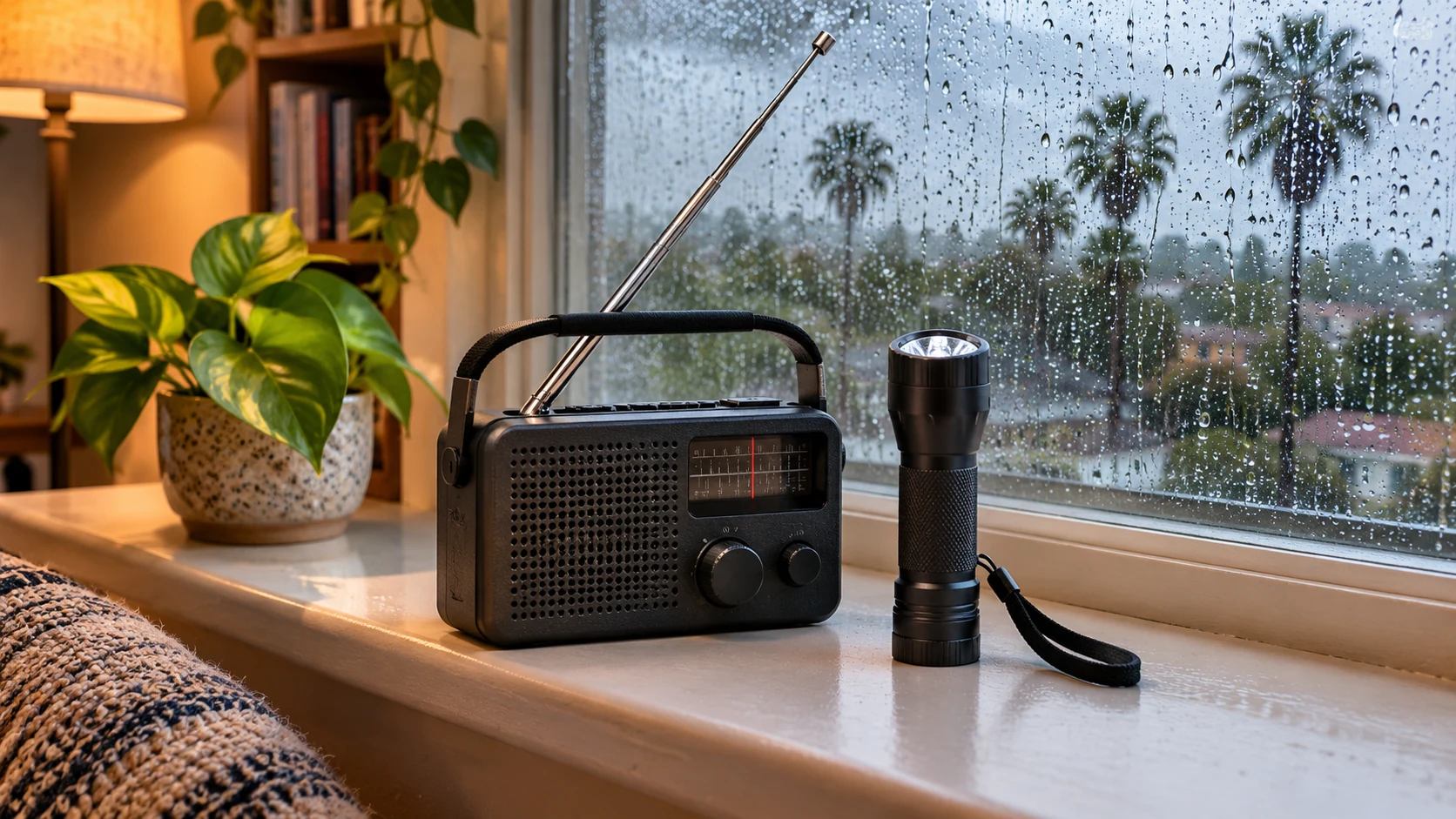
The National Weather Service’s receiver information explains differences among weather radio features, including location-based alert programming. Check the capabilities of a particular model and follow its instructions rather than assuming similar-looking products behave the same way.
Look beyond a feature list. Can the intended user read the display, adjust the volume, change the battery, and identify the controls? If a household member needs visual or other accessible alerting, investigate compatible options and confirm that the complete arrangement works for them.
Keep the instructions with the device or save an accessible offline copy. A short household card can explain basic operations in familiar language, but it should remain consistent with the manufacturer’s instructions.
Try a Household Listening Exercise
Ask someone who did not set up the radio to find a station and adjust the volume using the written instructions. Check whether the display remains readable in the room’s normal lighting and whether the controls can be operated comfortably. Let that person describe confusing steps before explaining your preferred method.
Use the result to simplify the arrangement. You might choose a more accessible storage location, enlarge a written station card, or practice changing power sources. Avoid adding new equipment just to solve a problem that clearer instructions would address. Repeat the exercise when a different household member becomes the main user.
Include a Realistic Power Plan
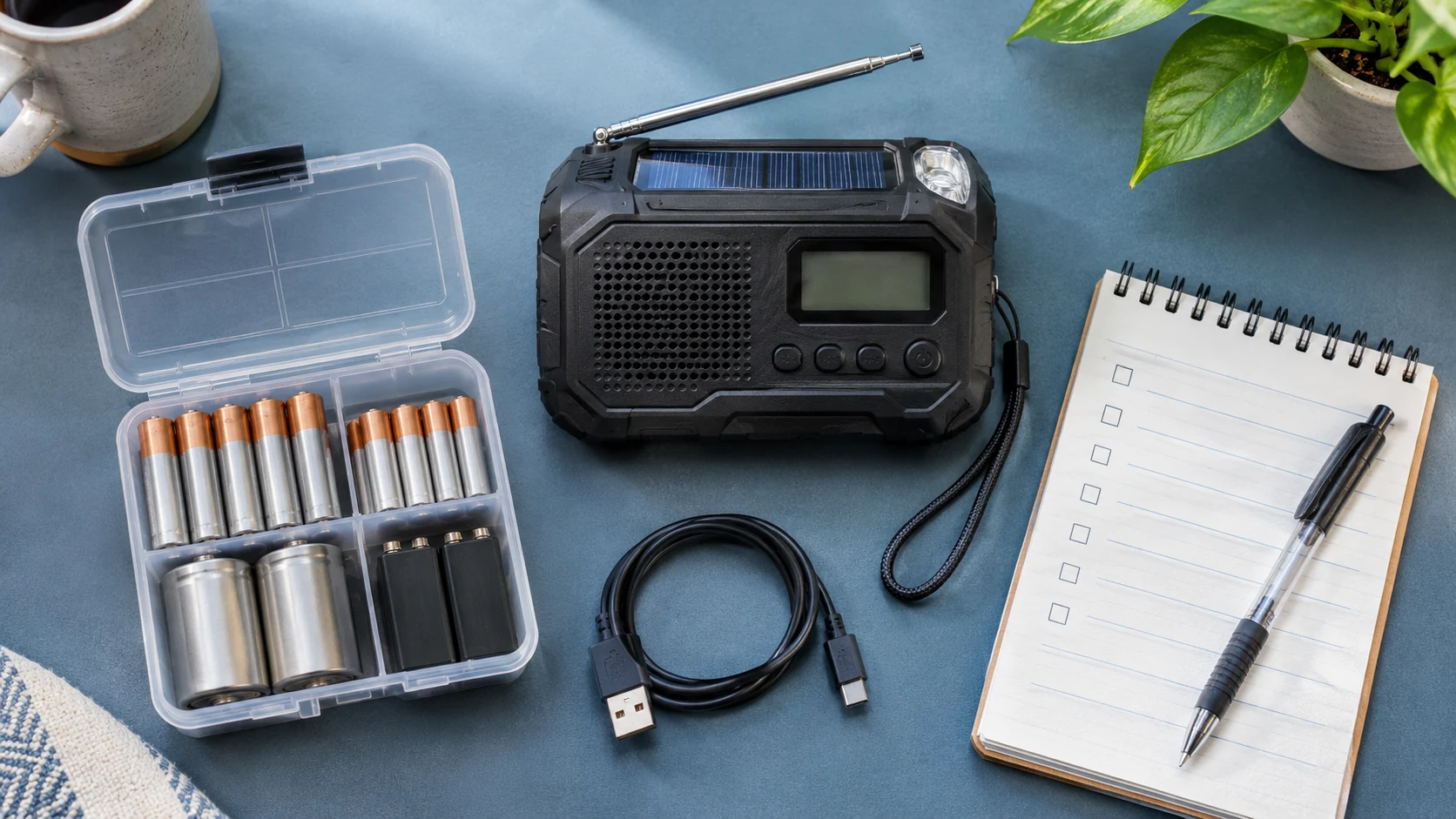
Check whether the radio uses replaceable batteries, a rechargeable battery, an external power supply, or a combination. Find out what remains functional when external power is removed. Test that behavior during a calm practice session.
Evaluate hand-crank or solar features according to the manufacturer’s specifications. Do not assume that a small panel or brief cranking session will support prolonged use or fully charge a phone. The useful question is what the equipment can reliably do under your expected conditions.
Store compatible supplies and review them periodically. Our guide to backup power for communication devices explains how to organize cables, charging priorities, and routine checks without relying on advertised capacity alone.
Use the Radio Alongside Official Alerts
A radio adds an information channel; it does not eliminate the need to understand local alerts. Keep official sources and household check-in arrangements available. Our overview of NotifyLA and Alert LA County can help you connect the radio to a broader plan.
Practice listening, adjusting controls, and locating written instructions with everyone who might use the device. Record any difficulty and simplify the setup. The best household radio is one that serves a clear purpose, works where it is needed, and can be operated confidently by its intended users.