
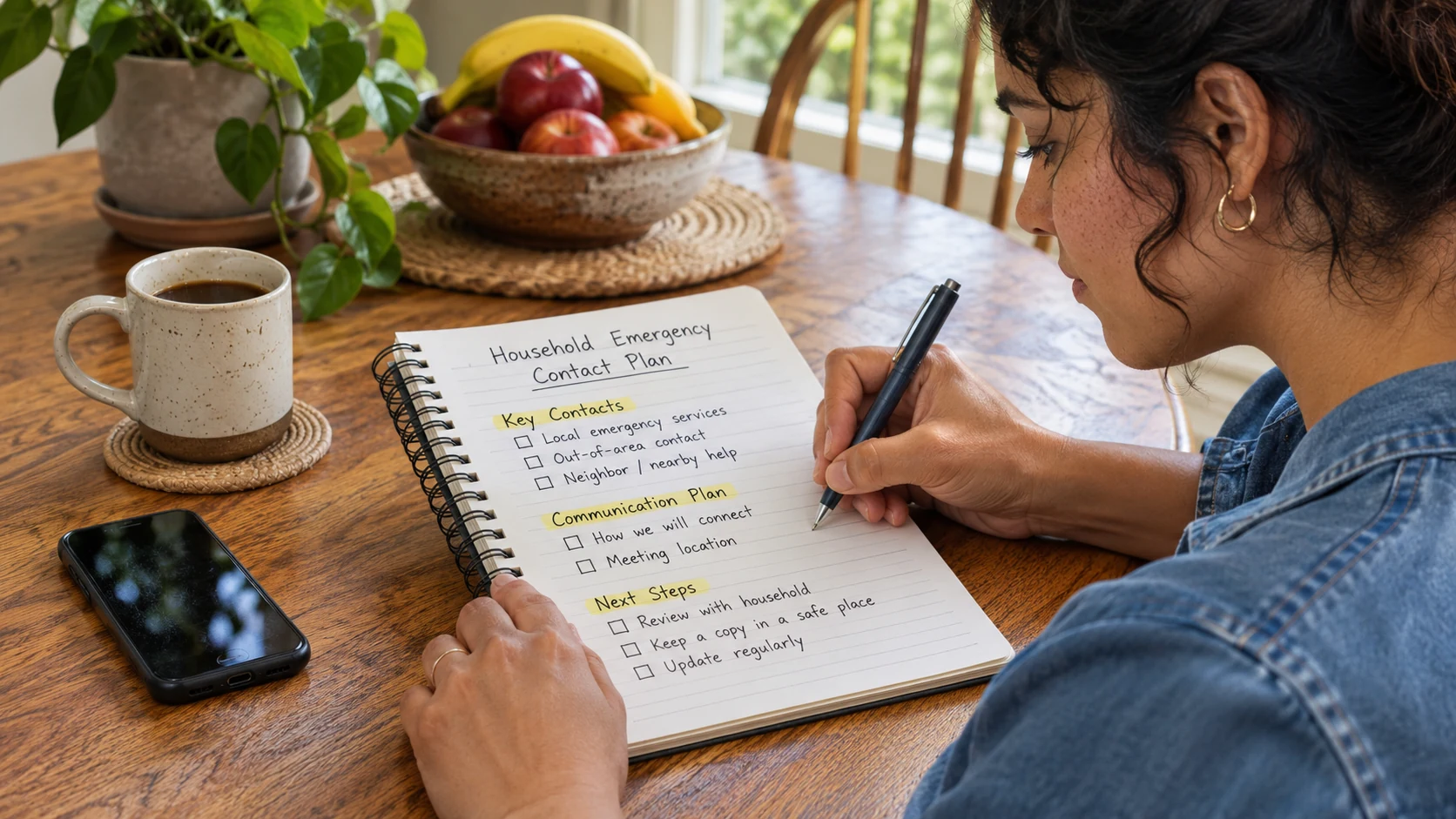
A family emergency communication plan answers a practical question: how will the people in your household reconnect if they are separated and ordinary routines are interrupted? A useful plan works for the people who will use it, including children, older adults, caregivers, and anyone who needs information in a particular format.
Start with a conversation and a short written document. You can improve it over time. The objective is to agree on contacts, meeting arrangements, and responsibilities before someone has to make those decisions under pressure.
Start Your Family Emergency Communication Plan With People
List everyone who belongs in the plan and the locations where they regularly spend time. Include people who live elsewhere but rely on your household for care. Ask about schedules rather than assuming you know them. A new class, evening shift, or different caregiver may change the arrangement.
The county’s household communication guidance recommends recording contact information for household members, an out-of-state contact, schools, caregivers, medical facilities, and other relevant providers. Use the categories that fit your family and leave out information you do not need.
Give Everyone a Chance to Explain Their Needs
Ask how each person normally receives messages and what happens when that method is unavailable. Someone may prefer a voice call, require written information, use an assistive device, or need a trusted person to help interpret a message. Build those preferences into the plan.
Decide who can help with specific tasks and confirm that they agree. Avoid assigning a neighbor or relative a responsibility without asking them. A backup person is useful when the first contact is at work, away from home, or dealing with their own emergency.
Choose a Contact Outside the Immediate Area
Select someone who is willing to receive and relay household updates. Give that person a current contact list and explain the role in plain language. They should know which people may check in and what information they are expected to share.
Agree on a short update format. For example, a practice message might identify the sender, their location, whether they are safe, and the next expected check-in. Label all practice messages clearly so they cannot be mistaken for a real emergency.
Discuss what to do when someone does not answer. A missed message can have many explanations, and a household plan cannot promise instant contact. Establish a reasonable next step, such as trying the agreed backup contact, without creating a rule that sends someone into a hazardous area.

Write Down Contact Details
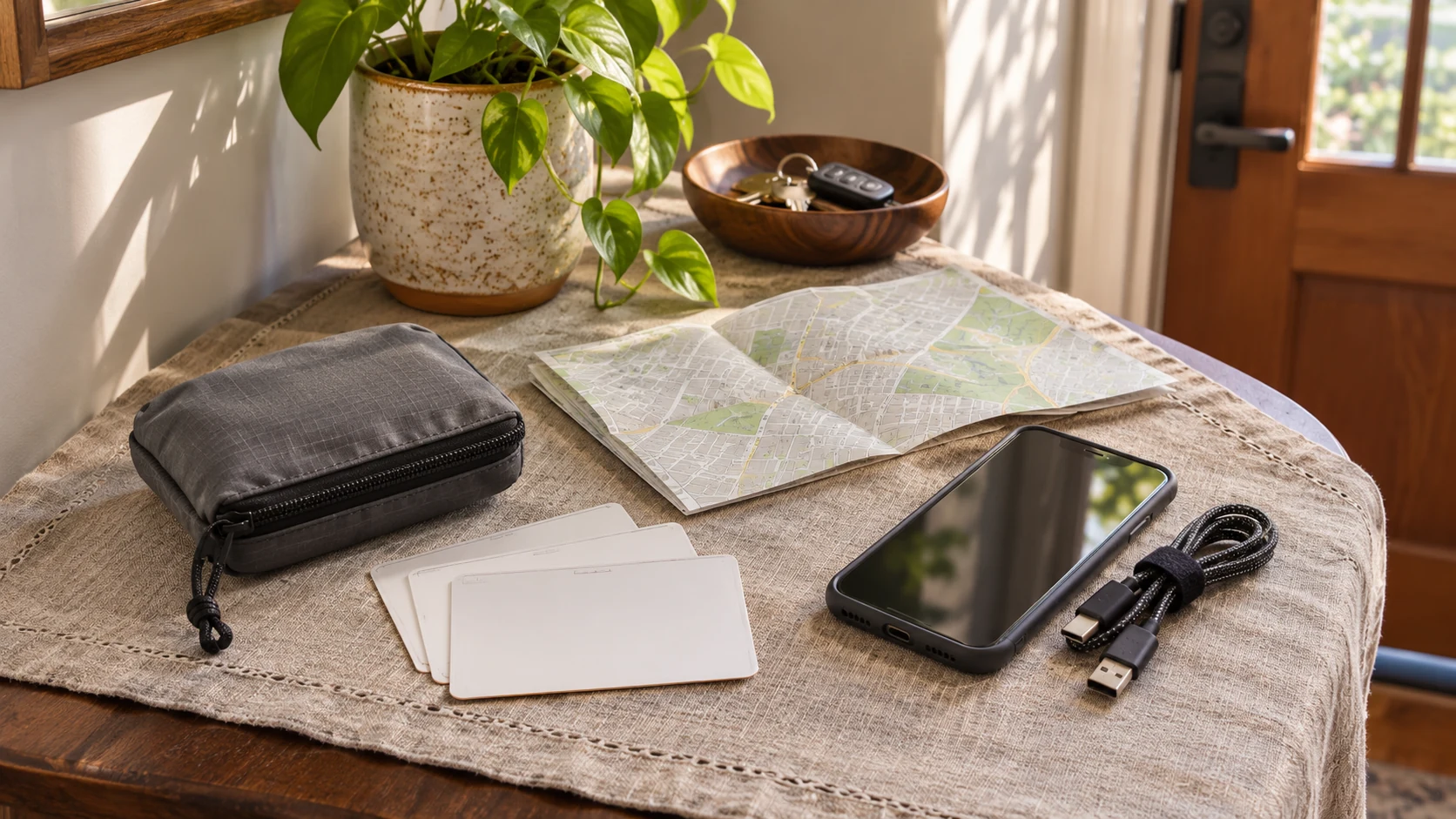
Phone address books are helpful, but the plan should also be usable without a charged or accessible device. Keep a paper version in an agreed location and give household members a suitable portable copy. Make the writing large enough to read easily.
Include the Details That Support the Next Action
- Household members’ names and their preferred contact methods.
- The agreed outside contact and an alternate contact.
- School, care-facility, and employer contact information.
- Meeting locations with complete addresses or clear descriptions.
- The date the information was last checked.
Limit sensitive information to what the intended recipient needs. A child’s contact card does not need to become a public directory of the entire household. Store fuller records thoughtfully and explain whom it is appropriate to share them with.
Agree on Meeting Places and Their Limits
The county’s family emergency plan recommendations include identifying places outside the home or neighborhood where people can meet. Choose locations that everyone can describe and find, then discuss how people would get there.
A meeting point is a planning tool, not an instruction to travel through unsafe conditions. Explain that official directions and conditions may require a different arrangement. Write down how the household will communicate a change instead of treating the first location as a permanent destination.
For children and adults in supervised care, obtain the facility’s emergency and reunification procedures. Confirm who is authorized to pick someone up, what identification is needed, and how changes are communicated. Do not assume a household contact card overrides those procedures.
Connect the Plan to Official Information
Agree on the official sources your household will use for emergency updates. Save the appropriate agency pages before an incident. Our explanation of NotifyLA and Alert LA County can help you organize alert subscriptions around home, work, and other important locations.
Discuss how to pass along an update accurately. Keep the agency name, timestamp, location, and requested action together. If a message is a personal observation, identify it that way. Avoid turning an uncertain report into a definite claim when forwarding it.
Prepare for a Phone or Charger Being Unavailable
Try a simple scenario: one person has left their phone at home. Ask whether they know an important number, can locate their paper contact card, and understand the next step. A plan should account for ordinary mistakes as well as larger disruptions.
Keep compatible cables and a suitable backup power source with your communication supplies. Practice using them and follow the equipment’s instructions. Our guide to backup power for emergency communication devices explains how to start with the devices you actually need.
If your household uses additional communication equipment, write down who knows how to operate it. Do not introduce a complicated device into the plan without training and realistic expectations about where it works.
Practice a Short Household Check-In
The city’s preparedness guidance encourages households to tailor plans to their needs and practice together. A brief discussion can reveal missing details without requiring an elaborate exercise.
- Choose a clearly labeled practice scenario and make sure everyone understands it.
- Find the written contact list and identify the outside contact.
- Compose a practice check-in using the agreed format.
- Review a meeting location and the circumstances that could change it.
- Write down one confusing step and decide how to improve it.
Keep the exercise manageable. If someone struggles with the wording or format, change the document. The plan is meant to support that person, not test their ability to remember a complicated set of instructions.
Update the Plan When Life Changes
Revisit the document after a move, a new school or job, a different caregiver, or a change in accessibility needs. Confirm the outside contact still agrees to the role. Replace outdated paper copies so that different people are not following different versions.
Extend the conversation to neighbors only with their consent. A separate neighborhood emergency contact plan can support nearby check-ins while keeping household details appropriately private. Begin with clear responsibilities and a version that everyone involved understands.