

A community event brings together people who may never have worked as a team. Organizers, venue staff, vendors, volunteers, and medical personnel can each hold different pieces of information. A community event emergency communications checklist helps identify how those pieces will reach the person responsible for making a decision.
The checklist below is a planning tool for discussion with your venue and appropriate event professionals. Adapt it to the event’s size, activities, and approved arrangements. It does not replace required permits, venue procedures, emergency services, or the instructions of the people responsible for medical care.
Confirm who is responsible for each decision
Identify an event lead and a backup, then record the people responsible for venue operations, volunteer coordination, medical support, and public announcements. Confirm who may pause an activity, request assistance, or issue an approved message to attendees. Avoid leaving these decisions to whichever volunteer happens to answer first.
OSHA’s emergency action planning guidance explains the importance of clear responsibilities, reporting procedures, and coordination. Although written for workplaces, it can prompt useful questions for an event planning meeting. Your event’s actual procedures should be agreed with the people responsible for the venue and response.
- Name a primary and backup contact for each essential role.
- Identify the event contact responsible for requesting outside emergency assistance.
- Confirm the venue’s emergency procedures and the event team’s responsibilities.
- Explain how a volunteer should raise an urgent concern without delaying necessary help.
Create a concise contact and location sheet
List roles, names, and agreed contact methods on a document that staff can quickly read. Include the venue address and the location descriptions the team will use. A large site may need named entrances or zones, but those labels should match the plan distributed to staff.
FEMA’s Incident Command System forms collection includes a communications list and a medical plan form. These illustrate the value of separating contact information from medical arrangements. A small event may use a simpler document, provided the responsible people agree that it contains the information they need.
Check the details directly with each contact. Restrict personal numbers to those who need them, and create a separate public information sheet for attendees. If your event is organized by a neighborhood group, its neighborhood contact plan can inform coordination without becoming a public attendee directory.
Review the location sheet with someone who did not help create it. Ask them to identify a named entrance or activity area from the information provided. If they need a verbal explanation, revise the wording or the agreed labels. An internal nickname may be familiar to long-serving organizers while meaning little to a new volunteer. Clear location descriptions should also relate sensibly to the venue address and directions needed by outside responders.
Test the communication methods at the venue
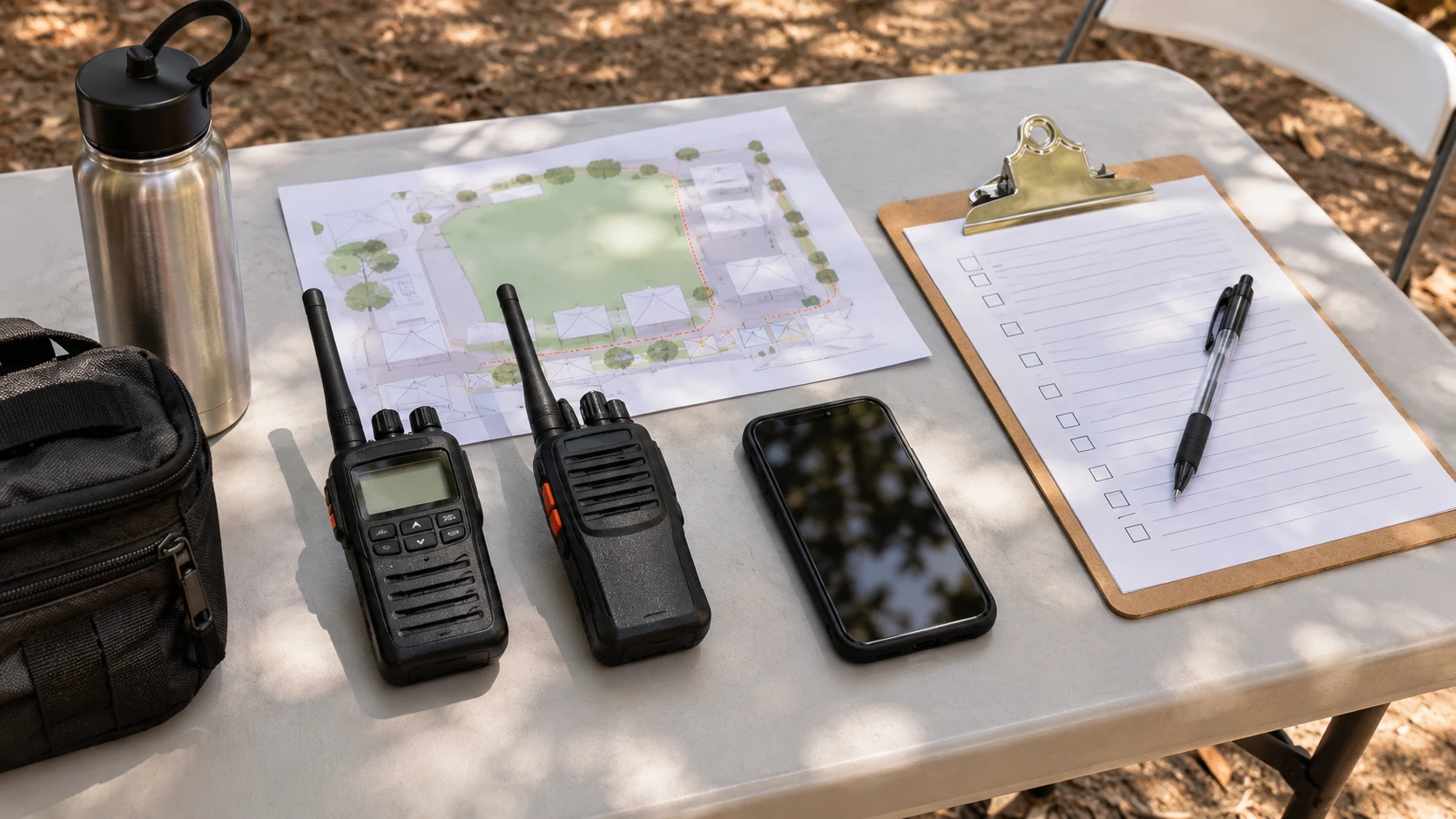
Confirm which devices are authorized for each task and who is responsible for supplying them. Test the actual equipment in the places where people will work. A device that performs well at an organizer’s desk may be harder to hear or use amid crowds, music, buildings, or outdoor activity.
Check usability as well as connection
Questions for the equipment check
- Can staff hear and understand each other from their assigned locations?
- Does each user know the agreed contact procedure?
- Are compatible charging equipment and approved spare power arrangements available?
- Who receives a report of a failed device, and how is it replaced?
- Is a usable alternative available if the primary method fails?
Record shortcomings and assign someone to resolve them before opening. Do not assume that volunteers can use unfamiliar equipment without an explanation. Our backup power guide for communication devices offers a framework for identifying power needs and planning charging arrangements.
Agree on a clear reporting format
Ask event staff to report what they observed, where it happened, and how they can be contacted. Location should be specific enough for the receiving person to understand. Encourage speakers to separate observation from assumption and to ask for clarification when a message is incomplete.
For a medical concern, volunteers should follow the event’s agreed notification procedure and the directions of trained personnel. Communication staff should avoid inventing diagnoses or offering treatment beyond their training. The communication task is to deliver a clear report and maintain contact as directed.
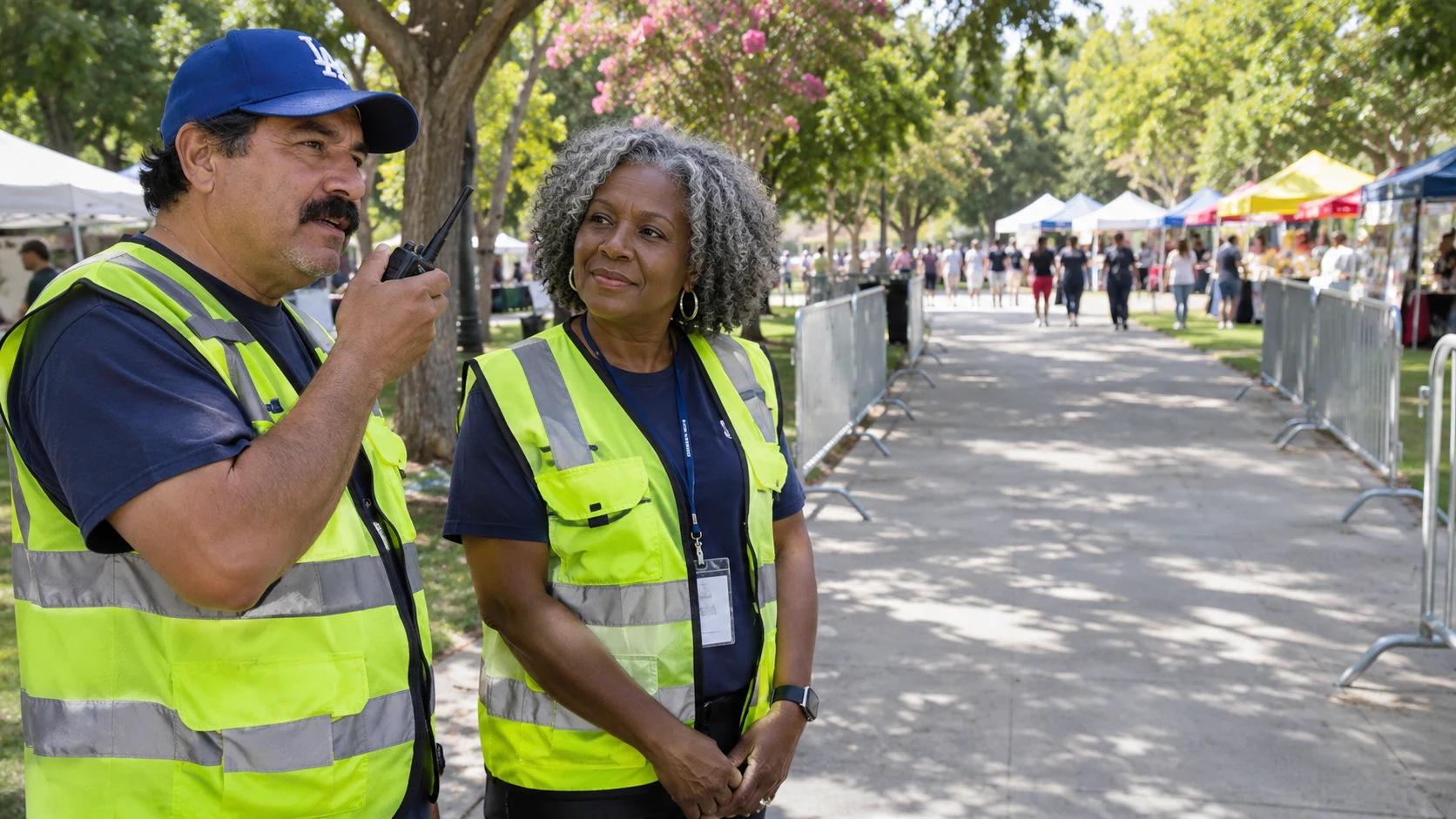
Plan how urgent traffic will be recognized and how routine questions will be handled during it. Staff should know whom to contact when they do not receive an acknowledgment. Public emergency assistance must not be delayed while someone tries to complete an internal reporting chain.
Make public messages accessible
A loudspeaker announcement alone may not reach every attendee. Think about people who cannot hear it clearly, people who need information in another language, and people who cannot see a posted instruction. Discuss suitable communication methods with the venue and with people who understand the audience’s access needs.
The Department of Justice’s effective communication guidance addresses communication with people who have vision, hearing, or speech disabilities. It is a useful reference when planning formats and assistance. The appropriate arrangements depend on the communication and the people involved.
Agree who approves attendee messages and where consistent versions will appear. Keep language direct and location descriptions familiar. Staff should understand how to guide someone to the appropriate information point without making promises about conditions they have not verified.
Brief the team and rehearse a simple scenario
Before attendees arrive, review responsibilities, locations, equipment, and the alternative communication process. Check that late arrivals and replacement volunteers receive the same briefing. Confirm who is maintaining the current contact sheet so that changes do not circulate as conflicting versions.
Walk through a hypothetical report, clearly identified as practice. Ask a volunteer how they would contact the designated lead and describe the location. Let the receiving person explain the next communication step. For a larger-event example, our article on medical radio communications at the Baker to Vegas relay discusses the importance of coordinated reporting.
Plan the handover and post-event review
At a shift change, confirm which responsibilities are transferring, whether any equipment has failed, and whether a matter remains unresolved. The incoming person should receive the current contact information and know who is supervising the role. Return or secure equipment and records at the end of the event.
Afterward, ask staff what made communication easy and what caused confusion. Record specific improvements, such as a clearer entrance label or a better briefing for replacement volunteers. A revised checklist turns those observations into practical preparation for the next event.